
Bridgepoint Behavioral Health in Roswell, Georgia
Bridgepoint Behavioral Health is a detox and residential treatment center at 550 Barrington Drive in Roswell, Georgia, serving adults from across the north metro Atlanta area.
AddressBridgepoint Behavioral Health550 Barrington DriveRoswell, GA 30075
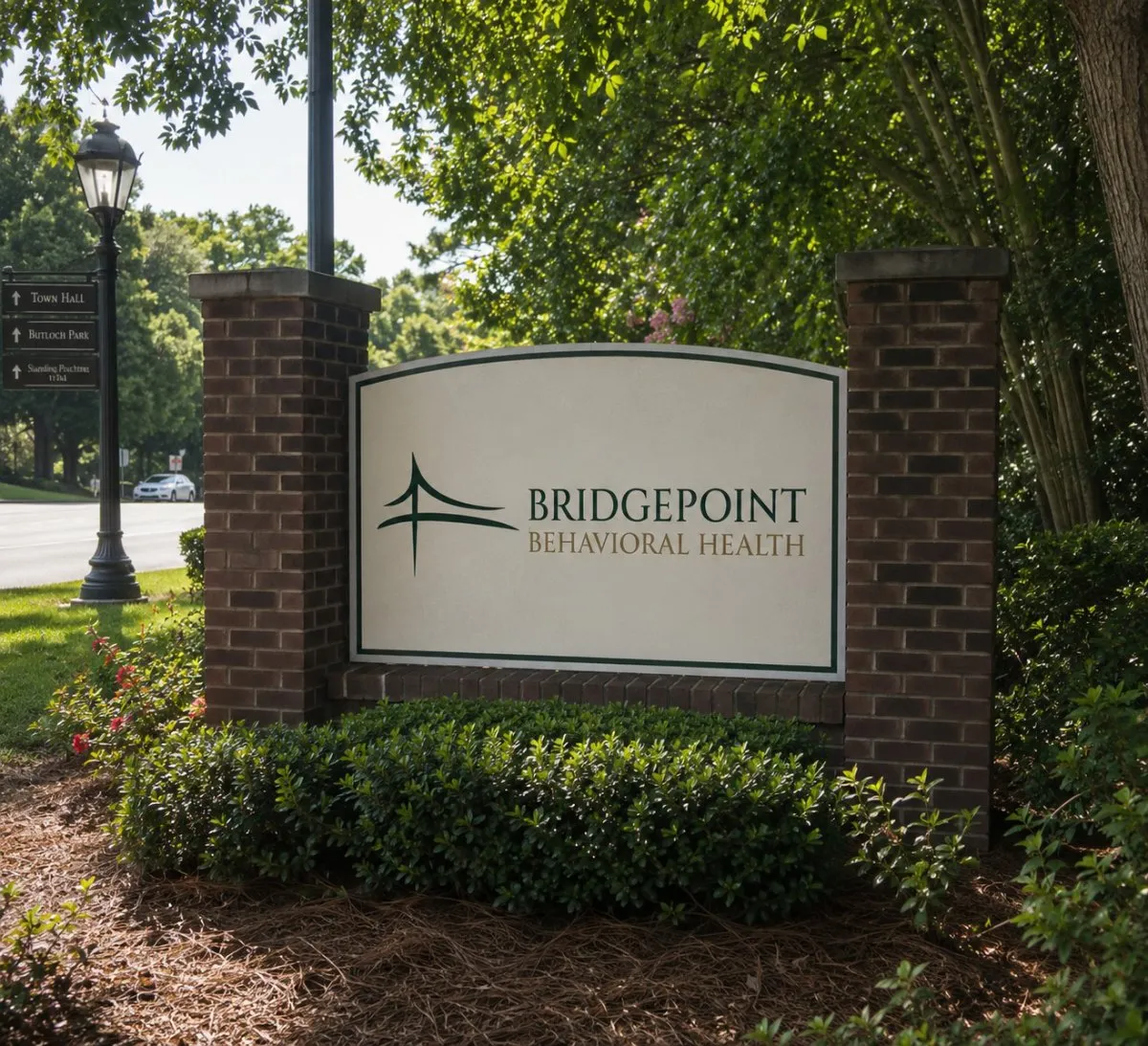
The campus at 550 Barrington Drive sits in North Fulton County, a few minutes off GA-400 and Holcomb Bridge Road, about 20 miles north of downtown Atlanta. Bridgepoint Behavioral Health brings medically supervised detox, residential addiction treatment, and residential mental health treatment together on a single campus, so a person can move from withdrawal management into residential care without changing providers.
This page exists so that anyone looking for the address, the phone number, or a straight account of what is offered here can find all of it in one place. Whether you are calling for yourself or for someone in your family, the number above reaches the admissions team directly, and asking questions costs nothing and commits you to nothing.
Services Offered at the Roswell Campus
Bridgepoint is built around three connected levels of care, all delivered in-house on the same campus rather than referred out to other providers. Keeping them under one roof is deliberate. The most dangerous moments in behavioral healthcare tend to be the handoffs, and a person who completes detox here moves into residential care with the same clinical team, on the same grounds, without a gap in between.
Medically Supervised Detox
Detox, sometimes called withdrawal management, is the medically supervised process of letting the body clear a substance while a clinical team manages the symptoms. It matters because stopping certain substances abruptly can be genuinely dangerous. Alcohol and benzodiazepine withdrawal in particular can become a medical emergency, which is why doing it under nursing and physician oversight is safer than attempting it alone.
Residential Addiction Treatment
Residential treatment means living on campus and working through a full daily schedule of individual therapy, group therapy, education, and practical skill-building. The reason this level of care exists is straightforward: some people cannot get well in the same environment where they got sick. Putting real distance between a person and the circumstances that fed the illness, then filling the days with clinical work, gives recovery a running start.
Residential Mental Health Treatment
A separate residential track serves adults whose primary difficulty is a psychiatric condition rather than a substance. That includes depression, anxiety disorders, bipolar disorder, and PTSD and trauma. Where a substance use disorder and a mental health condition are both present, dual diagnosis care treats them together rather than in sequence, because treating one and ignoring the other tends to leave the person where they started.
Medication-assisted treatment is available and decided one person at a time. A family program and aftercare planning are built into the model rather than added at the end.
What Bridgepoint Treats
The campus serves adults dealing with substance use, mental health conditions, or both at once.
Substances
Alcohol, opioids, heroin, fentanyl, methamphetamine, cocaine and other stimulants, benzodiazepines, and prescription drugs.
Mental health conditions
Depression, anxiety, bipolar disorder, and PTSD and trauma.
Veterans
A dedicated track for veterans carrying service-related trauma alongside a substance use disorder.
Finding the Campus
Barrington Drive runs off the stretch of Roswell that most people in North Fulton already know by driving through it. The practical landmarks are GA-400 to the east, Holcomb Bridge Road as the main east-west route, and the Chattahoochee River along the city’s southern edge. Hartsfield-Jackson Atlanta International Airport is roughly an hour south for anyone traveling in from outside Georgia.
That location is the point rather than an accident. It is far enough from a person’s daily surroundings to interrupt a pattern, and close enough that a family in Alpharetta, Sandy Springs, Marietta, or Atlanta can stay genuinely involved instead of visiting twice a year.
Areas Served
Bridgepoint serves Roswell and the surrounding North Metro Atlanta communities, including Alpharetta, Sandy Springs, Marietta, and Atlanta, along with Fulton and Cobb counties and the wider state of Georgia.
- Roswell
- Alpharetta
- Sandy Springs
- Marietta
- Atlanta
- Fulton County
- Cobb County
- Georgia
Contact Bridgepoint in Roswell
The fastest way to find out whether Bridgepoint is the right level of care is a straight conversation with the admissions team about what the programs involve, what a typical day on campus looks like, and what the next step would be. You can reach the team at (770) 275-3023, begin through the admissions process, or review the insurance information to see how coverage is handled.
Frequently Asked Questions
Where is Bridgepoint Behavioral Health located?
Bridgepoint Behavioral Health is at 550 Barrington Drive, Roswell, GA 30075, in North Fulton County just off the GA-400 corridor, about 20 miles north of downtown Atlanta. The main phone number is (770) 275-3023.
What areas does Bridgepoint serve?
Bridgepoint serves Roswell and the surrounding North Metro Atlanta communities, including Alpharetta, Sandy Springs, Marietta, and Atlanta, along with Fulton and Cobb counties and the wider state of Georgia. Hartsfield-Jackson Atlanta International Airport is roughly an hour south for anyone traveling in from outside the state.
What services does Bridgepoint offer?
Medically supervised detox, residential addiction treatment, and residential mental health treatment, all delivered in-house on one campus in Roswell. Medication-assisted treatment, dual diagnosis care, a family program, and aftercare planning are part of the model.